Anti-snore devices
Mouthpieces, strips, and positional aids.
Anti-snore devices tackle the problem from different angles, and the right one depends on why you snore. Mouthpieces nudge the jaw or tongue forward to keep the airway open. Nasal strips and dilators widen the nostrils. Positional aids stop you rolling onto your back, where snoring is usually worst.
None of these treat sleep apnea, which is a medical condition worth a doctor's visit. For ordinary snoring, it is often worth trying the simplest, cheapest option first and moving up only if it does not help.
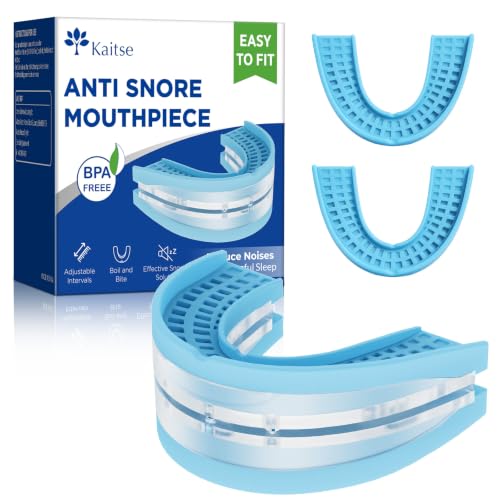
Kaitse Anti Snore Mouthpiece - Anti Snoring Devices for Sleep -
From $40
Shop Now
Somnofit-S Anti-Snore Mouth Guard by SnoreLessNow | Made in Switzerland
From $150
Shop Now
Tongue Stabilizing Device Mouthpiece - Anti-Snoring Tongue Device
From $30
Shop Now
How to choose an anti-snore device
Frequently asked questions
Do anti-snore mouthpieces work?
For many simple snorers, jaw-advancement mouthpieces reduce snoring by holding the airway open. Fit and comfort determine whether you keep wearing it.
Can anti-snore devices treat sleep apnea?
No. They address ordinary snoring. Apnea needs medical evaluation and often a CPAP machine or a dentist-fitted device.